14-10-2026
Seminario de Investigación: Functional organization of the superior parietal cortex in human and non-human primates
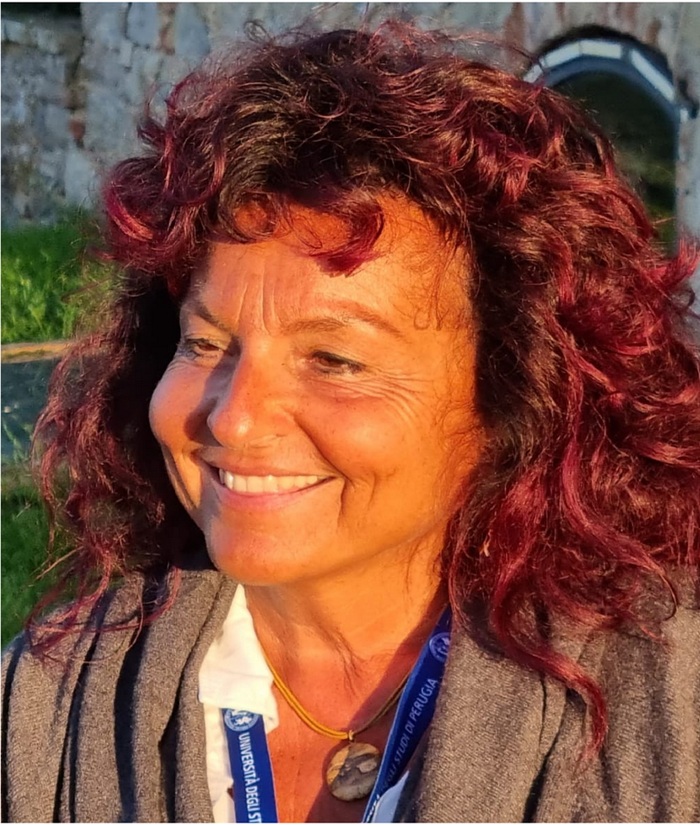
Patrizia Fattori. Dept. Biomedical and Neuromotor Sciences. University of Bologna, Italy
Seminario de Investigación: Functional organization of the superior parietal cortex in human and non-human primates
Ponente: Patrizia Fattori. Dept. Biomedical and Neuromotor Sciences. University of Bologna, Italy
Abstract. The superior parietal lobule (SPL) forms part of the posterior parietal cortex, lies medial to the intraparietal sulcus, and extends onto the medial surface of the hemisphere as the precuneus. Although its organization was long thought to differ substantially between humans and macaques, converging evidence now points to marked neuroanatomical and functional similarities. In this talk, I will review findings obtained using complementary techniques in macaque monkeys and humans that support a parallel organization of this cortical territory. The SPL comprises a mosaic of distinct areas, including an anterior, predominantly somatosensory sector encompassing area PE and a caudal sector integrating somatosensory and visual information, including areas PEc and V6A. Caudally, at the boundary between medial parietal and occipital cortex, there is a fully visual territory, with area V6 as the most rostral part of the visual extrastriate cortex. Single-neuron recordings, tract-tracing studies, and lesion studies in macaques indicate that these areas contribute, to varying degrees, to reaching and reach-to-grasp actions, upper- and lower-limb coordination, and visuospatial cognition. In humans, evidence from functional magnetic resonance imaging (fMRI), functional connectivity analyses, lesion studies, and transcranial magnetic stimulation (TMS) supports a broadly comparable organization.
Biosketch: Prof. Patrizia Fattori obtained her PhD in Neuroscience from the University of L’Aquila, Italy, in 1994. She developed her academic career at the University of Bologna, where she became Associate Professor in 2001 and Full Professor of Physiology in 2016. She is based in the Department of Biomedical and Neuromotor Sciences. Her research focuses on the neural mechanisms underlying visuomotor integration, particularly the role of the posterior parietal cortex in transforming sensory information into actions. Her main research interests include the control of reaching and grasping, spatial perception, and multisensory integration, with applications to neurorehabilitation and biologically inspired artificial intelligence. She has coordinated numerous competitively funded national and international research projects, including the European MAIA project and several Italian PRIN projects, and has led the “Perception, Movement and Brain–Body Interaction” spoke of the MNESYS programme. She also serves on international scientific committees and expert panels for major research funding agencies.
Fecha y Hora: miércoles, 14 de octubre de 2026, 13:00 h
Lugar: Seminario 4
PDF